A literal translation can turn a valid eligibility answer into a contradiction when words such as “support,” “household,” or “dependence” carry different practical meanings in Twi. A voice agent should preserve the applicant’s intended meaning, confirm ambiguity in the language she chose, and keep the source call record available for review.
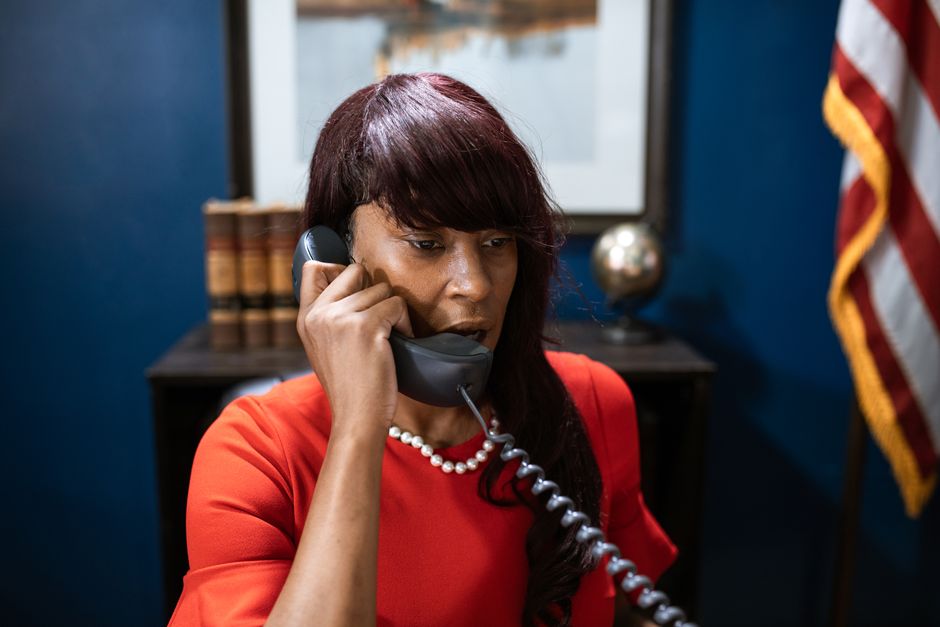
Ama, an invented composite applicant, is standing outside a pharmacy in Kumasi when the call reaches the question about household support. It is late afternoon. She is holding a paper bag of medicine against her hip while tro-tro horns cut through the conversation.
The agent asks in English whether anyone in her household supports her financially.
Ama begins in English, hesitates, then switches to Twi. She explains that her older sister sometimes sends money for food, but nobody provides regular support. The sister lives elsewhere. Ama pays her own rent and covers most daily expenses herself.
The system records her answer as yes.
That single word now suggests a stable source of household support. If the eligibility rule treats regular support differently from occasional help, her application could be rejected on a meaning she never expressed.
A correct sentence can still produce the wrong answer
The problem starts with categories that look simple in English. “Does anyone support you?” appears to invite a yes or no response. In an actual conversation, support may mean a monthly contribution, a shared household income, an occasional transfer, groceries from a relative, or help during an emergency.
Ama’s Twi answer contains the distinction. She receives help sometimes. She does not describe herself as regularly maintained by another member of her household.
A literal pipeline can lose that distinction in several places. Speech recognition may flatten a phrase into the closest English category. Translation may treat occasional assistance as ongoing support. The application workflow may then compress the translated sentence into a boolean field.
Each step can look technically valid while the final record becomes substantively wrong.
This risk grows when a caller moves naturally between Twi and English. A term introduced in English may be clarified in Twi, then qualified again in English. The meaning lives across the whole exchange. Twi and English code-switching requires the agent to preserve that context, rather than processing each utterance as an isolated translation task.
Confirmation must test meaning, not repeat wording
The agent needs to ask a better follow-up before committing Ama’s answer.
A weak confirmation would say, “You receive financial support, correct?” That repeats the system’s interpretation and pressures her toward a yes or no answer. Ama may agree because her sister has helped before, even though the eligibility question concerns something more regular.
A useful confirmation separates the concepts:
“You said your sister sometimes sends money for food, but she does not live with you and does not support you regularly. Is that correct?”
Now Ama can confirm the actual proposition that will enter the application record. If she corrects it, the system should retain the correction and the language in which she made it.
The same discipline applies when a benefits applicant changes language mid-call. The switch may signal that the caller needs greater precision, especially around family relationships, money, consent, or a sensitive event. It should trigger closer attention, not a shortcut back to the nearest English label. That broader failure mode is explored in what happens when a benefits applicant switches from English to Twi mid-call.
The record must preserve how the decision was reached
With the application still at risk, Ama asks, in Twi, whether occasional help counts the same as regular household support. That question is the turn. It exposes the ambiguity before the answer becomes final.
A responsible workflow should pause the categorical decision, capture the source exchange, and route the unresolved interpretation for human review when the governing rule cannot be applied confidently. The reviewer needs more than an AI summary saying “applicant receives support.” They need the relevant utterances, the confirmation, any correction, and the final field value.
Asenda Talk is being built for this kind of language-aware voice workflow. Its Twi speech recognition and synthesis are fine-tuned in-house rather than delegated entirely to a third-party speech wrapper. The platform also has a telephony lifecycle webhook pipeline with call-truth tracking, plus consent, opt-out, and audit trails for each call.
Those components make review possible. They do not prove that every eligibility interpretation is correct. Policy owners still need to define the categories, approved prompts, escalation rules, and evidence a reviewer must inspect.
Asenda Talk remains in active early access. Voice-agent configuration and the underlying call-record controls are built today, while feature parity with established platforms is still in progress. Vapi orchestrates the assistant runtime. Live outbound calling remains gated until an explicit telephony-provider decision is made, so this should not be described as a ready-to-launch outbound eligibility service.
Design the difficult answer before opening the phone line
Before deploying an eligibility agent, write down the answers most likely to change meaning across languages. Test distinctions such as occasional help versus regular support, relative versus household member, and shared expense versus personal income.
Then define what the agent must do when the answer stays ambiguous. It may ask one neutral confirmation, preserve the original-language exchange, and send the case to a trained reviewer. It should never force uncertainty into a clean yes or no merely because the application schema expects one.
In Ama’s scene, the reviewer receives her full clarification before the decision is made. The final record states that her sister sometimes helps with food, lives elsewhere, and provides no regular support. Ama leaves the pharmacy with the paper bag still tucked under her arm. Her application now reflects the answer she gave, rather than the answer a literal translation invented.
Comments
No comments yet.