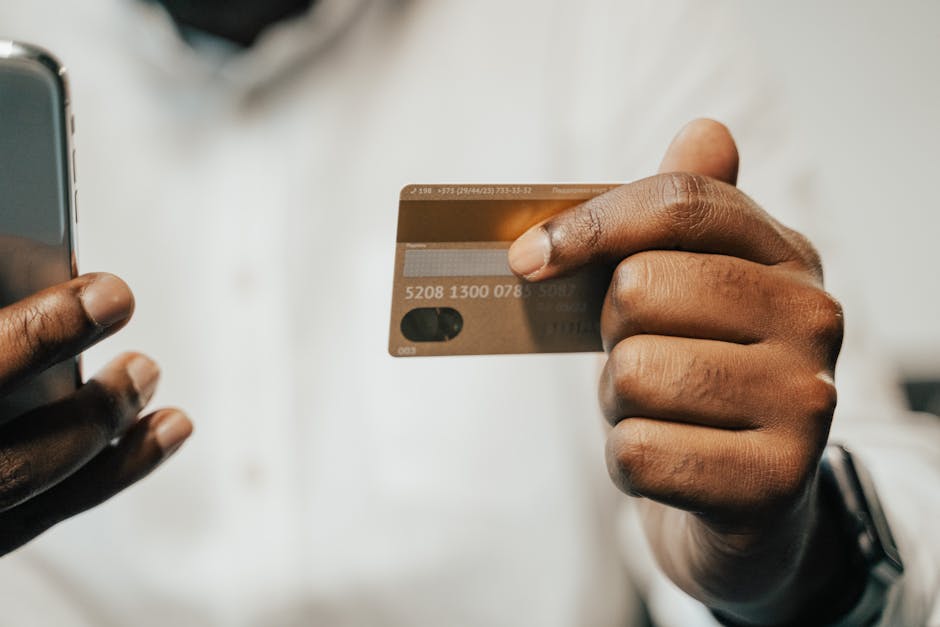
A failed payment becomes a second service failure when English-only automation cannot understand the caller well enough to choose the correct support queue. The caller reaches the wrong team, repeats the problem, or abandons the call before anyone can help.
Consider Kojo, a hypothetical composite caller in Accra. At 8:12 on Monday morning, he is outside a shop with his receipt folded inside his phone case. A payment failed, but the amount still appears unavailable in his balance. He calls support before work and begins in English, then switches to Twi when he tries to explain the difference between a declined transaction and money he believes has already left his account.
The automated agent catches “payment” and routes him to general payment enquiries. That queue handles card usage and merchant questions. It does not handle disputed debits.
Now the original payment problem has acquired a routing problem.
One keyword cannot carry the whole call
Kojo’s request contains several signals that matter: the payment failed, his available balance changed, and he wants the money traced. An English-only system may capture one familiar word while losing the relationship between the rest.
That partial understanding can look successful in a dashboard. The call connected. Speech became text. An intent was selected. A queue accepted the transfer.
Yet none of those events proves that the correct team received the call.
This distinction matters for Ghanaian support desks because callers may move between Twi and English within one explanation. The language shift can happen at the exact point where the issue becomes specific. A caller might state the category in English, then describe the disputed sequence in Twi because that is the clearer way to tell it.
Routing logic built around English keywords can mistake recognition for understanding. “Payment” is technically present, but “failed payment with an amount still unavailable” is the job the system needs to identify.
The same weakness appears when a system matches an account correctly but misses what the caller wants. Bilingual voice agent testing should separate account matching from understanding.
The wrong queue creates a new cost
Kojo waits, reaches an agent, and hears that he needs another department. His break is nearly over. If he hangs up, the disputed amount remains unresolved. If he stays, he may arrive late and still have to repeat the entire explanation.
For one beat, there is no good option.
The support agent asks him to restate the sequence slowly. This time, the agent identifies the dispute and transfers him manually. The turn arrives late enough to save the case, but not the first interaction. Kojo has spent his available time correcting the automation before anyone can investigate the payment.
That is the operational cost of poor bilingual routing. It adds transfers, repeated identity checks, longer handling time, and incomplete cases. It can also distort reporting. A system may record the first queue as the caller’s intent even though a human later corrected it.
A useful call record therefore needs more than the model’s first classification. It needs lifecycle events that show where the call went, whether the caller opted out, whether a transfer occurred, and how the final outcome differed from the initial route.
This is call truth: the observable sequence of events, rather than a reassuring status label.
Native Twi changes what teams can evaluate
Asenda Talk is being built for teams that need voice agents to work across Twi and English. Its Twi speech recognition and synthesis are fine-tuned in-house, rather than passed through a generic third-party voice layer. Teams can configure an agent’s persona, first message, and voice, while Vapi orchestrates the assistant runtime.
The practical benefit is testability. A support desk can create scenarios where callers switch languages, describe similar payment problems with different consequences, and correct the agent mid-call. The team can then inspect whether the transcript, intent, route, and final call outcome agree.
That evaluation should include hard cases:
- A declined payment with no balance change.
- A failed payment followed by an unavailable amount.
- A caller who begins in English and gives the decisive detail in Twi.
- A caller who rejects the agent’s first interpretation.
- A call that reaches the wrong queue and requires a human correction.
Asenda Talk also includes consent, opt-out, and audit records for each call, plus a telephony lifecycle webhook pipeline for tracking what happened. Metered billing sits behind an operator-controlled real-money gate, so billed calling cannot begin merely because an agent configuration exists.
The platform remains in active early access. Feature parity with established voice-agent platforms is still in progress, more African languages are on the roadmap, and outbound calling is gated until an explicit telephony-provider decision is made live. Teams should evaluate what works today and avoid treating planned capability as deployed capability.
Test the route before trusting the transcript
A strong pilot should score routing outcomes separately from transcription quality. The transcript can appear plausible while the queue choice is wrong.
Start with a small set of bilingual payment scenarios. Define the expected queue before each call. Record the detected intent, selected route, transfer history, caller correction, and final disposition. When the agent misroutes a call, preserve the evidence and test the same phrasing again after the change.
Also give callers a clear recovery path. Let them correct the category, request a person, or opt out without fighting the agent. A repeated question after a Twi billing dispute can be enough to end the call, as this Twi billing dispute scenario shows.
By Monday afternoon, Kojo’s hypothetical case is finally in the right queue. The useful lesson sits earlier in the record: the system heard “payment,” but the caller needed “disputed debit.” That difference belongs in the test plan before the next caller reaches the same fork.
Comments
No comments yet.