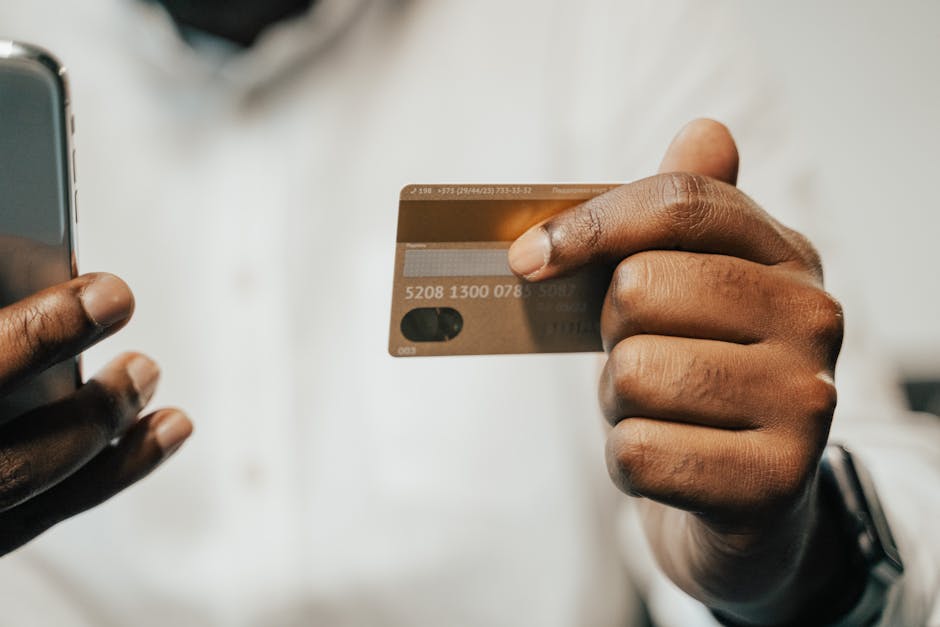
A disputed card charge can change meaning when a customer switches from English to Twi and adds one decisive fact: the card never left their possession. A voice agent must preserve that detail, the language transition, and the resulting dispute classification in the call record.
In London in 1854, physician John Snow faced a similar problem of meaning. Cholera deaths clustered around Broad Street, but the pattern alone did not prove that the public water pump was responsible. Some cases appeared to contradict his theory. The outcome remained uncertain until specific details explained those apparent exceptions.
The detail that changes the case
Snow investigated where people obtained their drinking water. One apparent exception involved workers at the nearby Lion Brewery, where cholera deaths were unusually limited. The workers had access to beer and a separate water supply, according to accounts of Snow’s investigation. Another involved a woman living outside the immediate area who had Broad Street pump water delivered because she preferred its taste.
Those details changed how the map could be read. Distance from the pump did not necessarily mean lack of exposure. Proximity did not necessarily mean exposure either. The decisive information sat inside each person’s circumstances.
Snow’s investigation, documented in his 1855 book On the Mode of Communication of Cholera, connected the outbreak to contaminated water. Officials removed the Broad Street pump handle during the outbreak, although historians continue to note that cases had already begun declining.
The lesson for a bilingual dispute call is precise: a broad complaint identifies the area of concern, while one concrete detail can determine what happened.
When English captures the complaint but Twi captures the evidence
Consider a composite customer calling a bank from Accra. She begins in English:
“I want to report a card transaction I do not recognize.”
That statement could lead to several paths. The merchant name may be unfamiliar. A family member may have used the card. The customer may have lost it. The physical card could have been stolen or copied.
She then moves into Twi because that is where she can explain the situation naturally. In that part of the conversation, she says the card is still with her. She checked her purse before calling. She did not hand it to anyone.
Now the complaint has a narrower shape. The bank still needs to investigate, and the customer’s statement does not prove how the transaction occurred. But the physical card’s continued possession is material evidence. It can affect the follow-up questions, the dispute category, and the action sent to a human reviewer.
If the system records only the English opening, the case remains generic. If it transcribes the Twi poorly, the record may imply that the card is missing. If it captures the words but fails to connect them to the active dispute, the transcript may look complete while the workflow proceeds on the wrong premise.
That risk is why language transitions belong in the audit trail. Reviewers need to see when the language changed, what evidence appeared after the switch, and which action followed.
What the call record must preserve
A useful record needs more than a final label such as “unrecognized transaction.” It should preserve the sequence that produced that label:
- The customer first reported an unfamiliar charge.
- The conversation moved from English to Twi.
- The customer stated that the physical card remained in her possession.
- The agent asked the appropriate follow-up questions.
- The system recorded the customer’s consent, any opt-out instruction, and the resulting action.
- A reviewer can trace the decision back to the relevant part of the call.
This sequence matters because bilingual conversations often carry meaning across language boundaries. A customer may introduce the problem in English, qualify it in Twi, then return to English for confirmation. Treating each segment as an isolated transcript can separate the evidence from the complaint it modifies.
Asenda Talk is being built for this setting. Its Twi speech recognition and synthesis are fine-tuned in-house, and its telephony lifecycle pipeline is designed to retain call-truth records, consent, opt-out status, and audit history. Voice agents can be configured with a persona, first message, and voice, while Vapi orchestrates the assistant runtime.
This remains an active early-access platform. Feature parity with established voice-agent products is still in progress, and outbound calling remains behind an operator-controlled real-money gate pending an explicit live telephony-provider decision. A configured agent does not mean an approved campaign can place calls.
Test the meaning before enabling the action
The practical test should begin with paired bilingual scenarios. Keep the English opening identical, then vary the Twi detail: the card is present, the card is missing, the customer lent it to someone, or the customer is unsure. Check whether each variation changes the follow-up questions and recorded disposition where appropriate.
Then review the full call trail. Can an operator locate the language switch? Does the transcript preserve negation and possession? Does the final case state match the customer’s complete account? If the answer is unclear, the workflow should stop before it reaches a live customer or triggers a costly action.
John Snow’s map became useful because investigation supplied the exposure details the dots could not show. A bilingual call record needs the same discipline. Capture the sentence that changes the case, connect it to the decision, and leave enough evidence for another person to verify why the system acted.
Comments
No comments yet.