A hybrid support desk treats English and Twi as normal parts of the same conversation, so callers can switch languages without restarting, repeating the issue, or being pushed into another queue. Operationally, that means fewer broken handoffs, clearer intent, and a more complete record of what happened on each call.
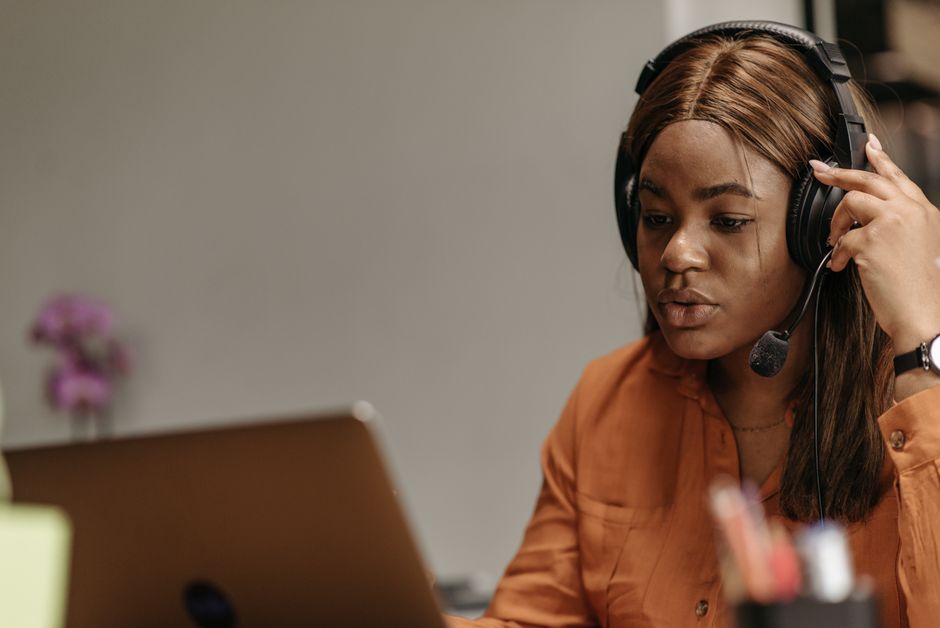
At 4:47 p.m. in Kumasi, Adwoa has one hand on her headset and the other around a paper cup of tea gone cold. She is a fictional composite, but the problem in front of her is familiar: a caller begins in English, switches to Twi while explaining a disputed payment, then returns to English for the reference number.
The desk’s English-only voice agent loses the thread after the switch. The transcript now suggests that the caller confirmed the payment. Adwoa hears the opposite. If she accepts the transcript, the dispute may be closed incorrectly. If she starts the call again, the customer must repeat an already tense explanation before the support desk closes for the day.
For one uncomfortable minute, neither option is safe.
Language switching is part of the issue
Support conversations rarely stay inside neat language boundaries. A caller may use English for account terms, Twi for the event itself, and English again when reading a code from a message. That movement carries meaning.
People often choose the language that gives them the clearest words for a particular part of the story. A formal phrase may arrive in English. Frustration, urgency, or a family relationship may be easier to explain in Twi. Forcing the entire call into one language can remove the detail an agent needs to make the right decision.
A hybrid desk plans for this from the beginning. Its call flows, escalation rules, transcripts, and quality checks assume that switching can happen mid-sentence. The customer does not become an exception when it does.
This matters most when a small misunderstanding changes the outcome. A payment dispute, delivery direction, clinic instruction, or eligibility question can turn on intent rather than isolated words. [Native Twi speech processing](\/blog\/native-twi-speech-processing-how-intent-outperforms-word-recognition-08aeac3f\/) matters because word recognition alone can produce a plausible transcript while missing what the caller meant.
Fewer resets create cleaner support operations
At Adwoa’s desk, the immediate benefit is continuity. A voice agent that can process Twi and English can preserve the reason for the call as the customer moves between them. The support team receives one conversation record instead of fragments created by transfers, restarts, or manual summaries.
That changes several operational tasks.
Supervisors can review the actual language transition rather than guessing from an English-only note. Human agents can enter an escalation with the earlier context intact. Consent, opt-out events, and call outcomes can remain attached to the same call record. Billing teams can inspect the real duration and lifecycle of the call instead of relying on an assumed completion state.
The result is less reconstruction. Adwoa can listen to the relevant section, confirm that the caller disputed the payment, and route the case with the correct context before the shift ends. The disputed charge still requires investigation, but the language switch no longer determines whether the case starts from a false premise.
This is where call-truth tracking becomes practical rather than technical. A support desk needs to know whether a call connected, what consent state applied, when it ended, and whether the recorded outcome matches the lifecycle events. Language understanding and call records solve different problems, but both must hold together when a supervisor reviews a difficult case.
Native Twi changes what the desk can evaluate
A system described as “Twi-compatible” may translate prompts or pass audio through a general speech service. That tells a support manager little about performance during code-switching, regional pronunciation, interruptions, or emotionally compressed speech.
Asenda Talk takes a different technical path. Its Twi speech recognition and synthesis are fine-tuned in-house rather than wrapped around a third-party voice API. Teams can configure an agent’s persona, first message, and voice, while Vapi orchestrates the assistant runtime.
The operational question remains concrete: what happened when a caller moved from English into Twi at the point where the issue became difficult?
Early evaluations should use calls built around that moment. Test a caller who states the account reference in English, explains the failure in Twi, interrupts the agent, then asks for the next step in English. Review the transcript, captured intent, escalation, consent record, and final call state together. A polished greeting proves very little if the agent loses the dispute halfway through.
The same caution applies to scale. News that Absa’s chatbot fields 100,000 queries monthly shows how quickly language systems can become part of daily operations. Volume makes small interpretation errors repeat. A hybrid desk therefore needs evaluation by call type and consequence, especially for financial, health, and public-service conversations. [When a voice agent cannot actually speak Twi](\/blog\/what-happens-when-a-voice-agent-can-t-actually-speak-twi-c28210b9\/), the failure appears in the workflow long before it appears in a product description.
Build the workflow around real language behaviour
Start with recordings or scripts that reflect how your callers actually speak. Mark where they change language, where they repeat themselves, and where a misunderstanding would create a harmful outcome. Those points should shape agent prompts, escalation thresholds, and supervisor review.
Keep a human path available for calls involving uncertainty or material consequences. Preserve the full audit trail so the reviewer can see consent, opt-out status, lifecycle events, and the conversation context. Then evaluate the system on completed tasks and correct escalation, rather than fluency alone.
Asenda Talk is in active early access. Its agent configuration, native Twi speech stack, call lifecycle pipeline, metered billing controls, consent records, and secrets management are built today. More African languages are in progress. Live outbound calling remains gated behind an explicit telephony-provider decision, so it should not be treated as generally available.
The next morning, Adwoa opens the disputed case and sees one continuous record: the English reference, the Twi explanation, the escalation, and the true call outcome. She still has work to do. She no longer has to guess what the caller said.
Comments
No comments yet.